Readings
- Esther 3
- Esther 4
- Proverbs 21:1
Prayer
Pray… for moments to be brave, and the bravery to go through with them.
Day 225 – Esther #2
Esther becomes Queen and Mordecai protects the king
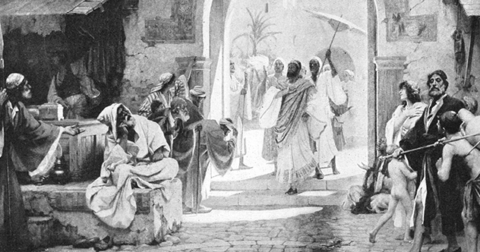
- Flick back to 1 Samuel 15 for a quick refresher on some background to the events today. In it, Israel’s flawed first king, Saul, was told by God to completely wipe out the evil Amalekites. Remember what happened? Saul killed most of them, but spared some – the king, good livestock, and possibly other people. Saul was rebuked for not following God’s command to destroy everything. Samuel, the prophet who brought God’s messages at the time, killed the Amalekite king himself. However, it seems not everyone was wiped out. The Amalekites (those that remained and, later, their offspring) continued to have a long running conflict. Haman, who we meet today, is a descendant of king Agag, which may explain some of the hatred of the Jewish people that we read about today in Esther chapter 3.
- Describe Haman, the man that the king promoted in the opening verses of Esther 3. What did he conspire to do in verse 6, following Mordecai’s refusal to bow to the king?
- It’s interesting to note that Haman decided not just to punish Mordecai, but the entire Jewish people instead. The “whole kingdom” (verse 6) would have comprised all the exiles, and therefore the vast majority of the Jewish population. Who do you think the king agreed to this?
- How did Haman decide when the massacre was going to take place? The Persian word for “lots”, which is “Pur” (or the plural “Purim”), is used by Jews to this day to describe a feast celebrating the events of this book.
- Look at the end of Esther 3, as the people of the nation begin to hear about the upcoming plans. As the king and Haman chilled out together drinking (in Esther 3:15), how were the people in the city of Susa reacting?
- In Esther 4, Mordecai grieved for the situation that the Jews faced. Esther organised a meeting between Mordecai and an official of the palace called Hathach. What did Mordecai implore Esther to do? Esther, as the queen, knew that she was in a uniquely powerful position to influence the king, but what were her concerns? Look at Esther 4:10-11 to help you.
- What was Mordecai’s response? Did Esther agree to help?
- What does the proverb that we read today suggest about who is in control of events at all times?
Esther isn’t perfect, is she? Up to now she has hidden her Jewish background for her safety, and will almost certainly have engaged in non-biblical practices to get to her position as queen. She now has to be persuaded to act to save her people. But act she will. Esther, despite her past, is about to be the hero!
Take a final look again at Esther 4:13-14. Mordecai speaks great words of wisdom which tie together two great principles of the Bible: God’s sovereignty (i.e. His ability to make whatever He wants to happen happen) and man’s responsibility (i.e. that people make their own choices when they do something). Mordecai fully trusts in God, and trusts that God will save them in some way. He *also* believes that the reason Esther was in the position she was in – despite the sin she might have had to commit to be there – could be so that God could use her to save the Jews. He knew she should act.
“If you keep silent”, Mordecai reminds her and us, “God will deliver us some other way. But don’t do that Esther. God has put you where you are and can use you powerfully. You may be putting your life on the line, but let’s be honest, it’s already on the line, because you’re a Jew! Stand up for God and trust in Him”.
We’re not kinds or queens, and we don’t have the lives of a nation depending on what we do or don’t do. But we are influential in the community that God has put us in. Instead of wondering who else may bring your friend to Christ, why not consider how God has given you the opportunities and talents to do it yourself? You might not be saving thousands of lives, but there’s still amazing value in bringing one person to faith.
Leave a Reply
You must be logged in to post a comment.