Readings
- Genesis 14
- Hebrews 5:5-11
- Hebrews 7:1-22
Prayer
Pray… for clarity in today’s tricky readings.
Day 20 – Abraham & Melchizedek
Abraham tithes 10% to Melchizedek and Christ’s priesthood
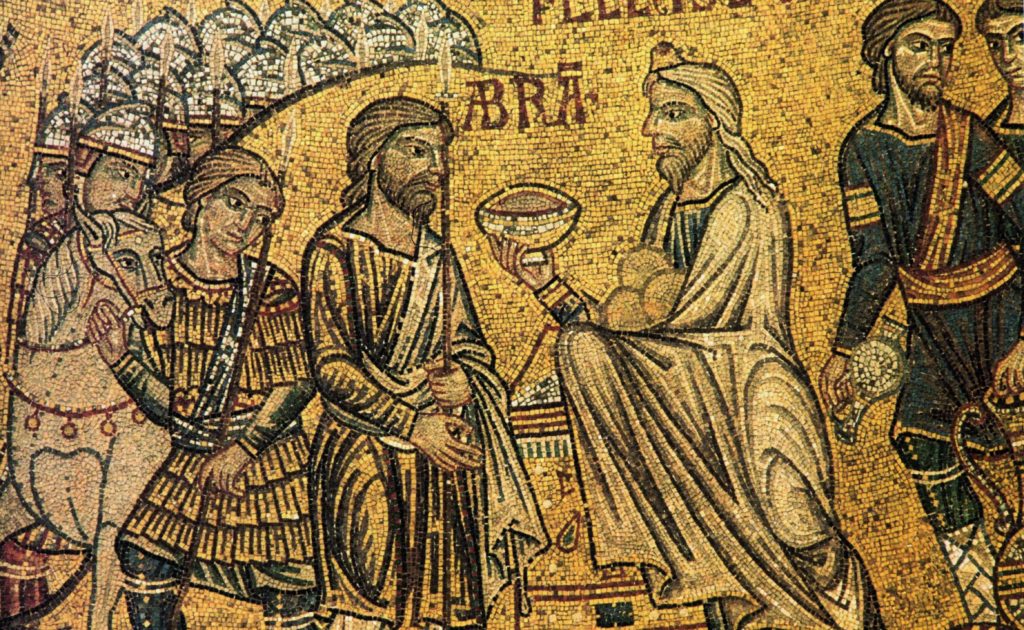
- Hands up if you’re completely baffled by the passages today! Come on, hands up! Yup, the story of Melchizedek is a confusing one, and you can be forgiven for getting to the end of today’s readings and not really picking up on much. The passages in Genesis are full of difficult names and the passages in Hebrews have theology that is especially difficult to consider so early in the year.
- First things first – don’t try writing down a literal retelling of each passage in your journals. It’s unlikely to be helpful to you. Take a step back with me and let’s take a look at the bigger picture together.
- Let’s get Genesis 14:1-16 out of the way first. The names are weird, and the place names difficult to pronounce, but try and work out what the general story is saying. What’s the setup? Who is fighting who? Does your study bible have a map of where the kings might have travelled?
- What happens to Lot, Abraham’s nephew, when the kings of Sodom and Gomorrah flee in verses 10-12? What did Abraham (who, incidentally, is called a a Hebrew for the first time in the bible) do in response? Was Abraham trusting that God would help him?
- In verses 17-24, we read about some of the post-battle discussions between Abraham and Melchizedek, the king of Salem. How else is Melchizedek described in verse 18?
- How did Abraham respect Melchizedek? What did Abraham do at the end of verse 20?
- We don’t know anything more about Melchizedek’s life. We don’t know who his family was, or what happened to him after this. The only other references are a brief mention in Psalms and the passages we read in Hebrews today. What do you think is the main connection that the writer in Hebrews is trying to make in regards to Melchizedek and his connection with Jesus?
To understand a little about this passage, we need to understand a little about the role of a high priest. During the time in the wilderness to come, after Moses leads the Israelites out of slavery in Egypt, God would establish priests to offer sacrifices for sin on behalf of the people. These sacrifices would make somebody right with God again. High priests had an even more special connection with God – in certain times and in certain places, they could be closer to God than anyone else. We’ll learn all about this properly when we read Exodus.
The book of Hebrews often uses the phrase “to the order of Melchizedek” when referring to Jesus. This suggests, perhaps, that Melchizedek had a role even greater than the high priests. Certainly, Abraham thinks he’s someone very special indeed, for he gave him 10% of all the loot from the battle. When we give 10% of our income, it’s called a “tithe”. Some people do this at church.
Hebrews goes on to say that Jesus is the Great High Priest. That means he’s greater than regular priests, greater than high priests and even greater than Melchizedek. All of these people were able to fulfil a limited role in helping to deal with someone’s sin, but they could not deal with sin in the way that Jesus did. Priests had to sacrifice animals day after day when people kept on sinning. Not Jesus – he died once and defeated death for everyone who trusts in him, and for all time. This is what Hebrews 7:26-28 is saying.
Melchizedek points us to the greatest sin smasher ever – Jesus!
It should also remind you of the talk at Eureka on Friday when we called as the Transfiguration. Remember how we heard that Jesus was the greater law keeper than Moses? And the greater prophet when we thought about Elijah? Here, Jesus is the greater priest too.
So, as you write your notes for today, feel free to write whatever you find helpful from your studies in Scripture, but don’t confuse yourself with the details. It’ll just bog you down, and you don’t want that on day 20. If you only take two things from this, make them these:
- Abraham followed God in his actions (much better than his actions with the stories about Sarah!)
- Melchizedek, the high priest, points us to Jesus, the “Great High Priest”, who dealt with our sin once and for all.
Leave a Reply
You must be logged in to post a comment.