Readings
- Samuel 22:1
- Psalm 142
- Psalm 57
Prayer
Pray… that in our lowest or hardest moments, we would seek God’s refuge and strength..
Day 133 – David in the Cave
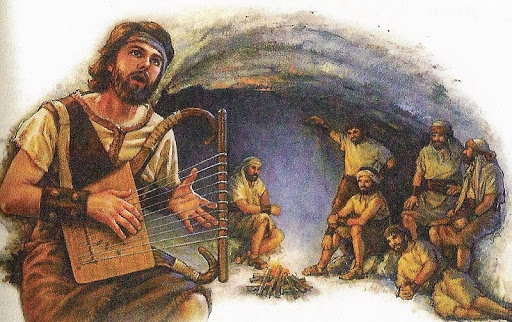
David runs to a cave, prays to God & writes psalms
Yes – the first reading is one verse only. It’s a Psalms focus today!
- David remains on the run as he flees Saul, but today’s readings in our One Story program only carries us a single verse further forward in that particular story-line. Where did David go and hide? Who was with him? Why do you think these people joined David?
- Our reading plan focuses on the book of Psalms more this week than at any other point. This is because many were written by David and they closely tie in with David’s experiences in 1 Samuel. Think about the psalms we’re reading as not just a bit of background noise to the main story-line. They are very important on their own! You might have previously thought of the psalms as a collection of poems or songs, just like you may see in a church hymn book. They are, of course, but it’s easy to forget they all had authors, and history, and stories behind their creation.
- In your bible, you’ll probably find that above each of the psalms – or at least Psalm – is a little message about how it was written by David, and that he wrote them whilst in the cave. Your bible will be full of little asides and useful information like that, even if you don’t have a study bible. Get used to reading this extra information and exploring it to enrich your understanding of the texts.
- David, of course, was a real person. This is real history. David, who will only be a young man at this point, really did write these Psalms in a cave whilst hiding from the king. Once again, put yourself in his position and think about his emotions. When he wrote Psalm 142, what do you think he was feeling and how is this shown in the words?
- What about in Psalm 57? What is his attitude here? How is it different, and what is similar to Psalm 142?
- What do you think you would tell God if you were hiding for your life in a dark cave? How do we know that David’s relationship with God is not just words, but a true and living trust?
Psalm 73, which we didn’t read today, is one of my favourites. It might not be a psalm of David, but you could perhaps imagine him penning something similar. In the text, the psalmist despairs as he recounts the struggles he had in life whilst trying to remain faithful to God, contrasting them with the prosperity of those who have rejected God seemed to have. David might have been tempted to say the same as he sat in the cold darkness of the cave whilst the king considered how he might kill him. Psalm 142:2 – also written whilst in the cave – suggests that perhaps he did.
But like the Asaph, the author of Psalm 73, David knew who to turn to for ultimate comfort and strength. Asaph ends his words with “.. for me, it is good to be near God. I have made the LORD God my refuge, that I may tell of all your works.” David’s words are like an echo. “I cry to you, O LORD; I say ‘You are my refuge, my portion in the land of the living’”.
In your deepest hours of need, you have a choice to turn away from God, blaming Him for your struggles, or you can act like David, turning to Him for strength and praising His name yet still. The first option will bring bitterness, but the second hope and a light. This was never more true than when I had to react to the death of my father when I was 24 years old, and I can look back on this time and see how God brought me through the sadness of those difficult days.
David’s despairing cries to God in his darkest moments are, of course, linked to our understanding of the gospel. David couldn’t stand up to the armies of Saul on his own. His situation was desperate, just like our situation when faced with the reality of sin and death. The glorious news that we (and David) know is, of course, that whatever we’re facing, our Father God is bigger and stronger. With Christ on our side, we have absolutely nothing to fear.
Leave a Reply
You must be logged in to post a comment.