Readings
- Genesis 4
- Hebrews 11:4
- 1 John 3:10-15
Prayer
Pray… that you will have a heart that seeks to glorify God above all things, rather than serve your own sinful desires.
Day 6 – Cain & Abel
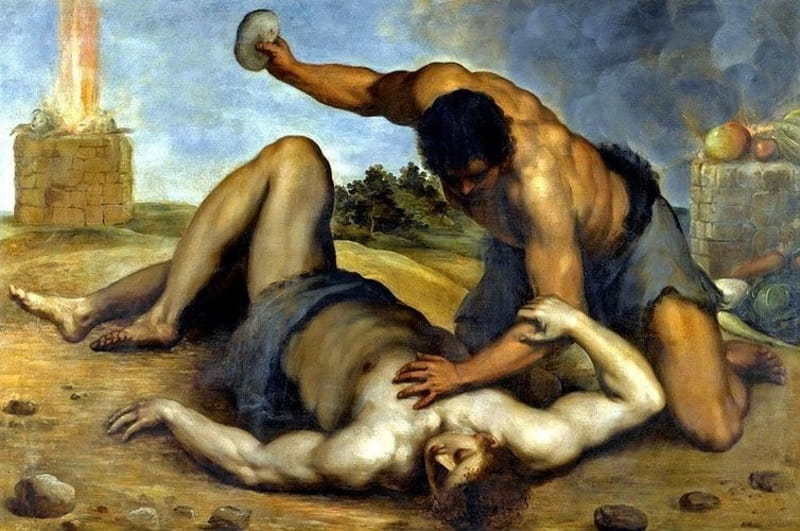
Abel’s faith & sacrifice vs. Cain’s jealousy & hatred
Make sure you read “1 John” today, not “John” – they’re different books!
- Sin, which came into the world in yesterday’s readings, rears its ugly head and its awful consequences in the form of pride, envy and murder, as we continue our reading plans today with yet more familiar stories. This time it’s the thought-provoking account of Cain and Abel. God, of course, hadn’t yet given laws to His people about how to live (they’ll come later), so there is an interesting debate about how we can consider or understand the sin that is being committed here, but that conversation is for anther time. What we can certainly agree on is that Cain’s heart was not focused on God in his actions.
- I haven’t yet discussed the topic of bible versions that you might choose to use for your personal study. I’ll generally use the ESV in references, but the NIV or any other good quality translation is fine. If you have the ESV, you might find certain terminology odd – a good example being the word “knew” in Genesis 4:1. In this context, it means that Adam slept with Eve, eventually bringing – through God’s help, as we read in the same verse – their first son, Cain.
- You may wonder why Cain’s offering didn’t please God. What thoughts do you have about why this might be? It doesn’t specifically say, but it may be that his offering was somewhat limited, suggesting that he deserved to keep the best of his crops for himself. Compare that to how Abel’s offering was from his “firstborn” and “fat portions”. Hebrews 11:4 casts a little more light. In what ways are we like Cain? Are there areas of our life where God comes first, and other areas where we refuse to give Him the full glory, or try and hide Him?
- Consider Cain’s reaction to God’s rejection of his gifts. What sinful attitudes did he show? Can you be angry and obedient at the same time?
- Verse 7 of Genesis 4 might be one you know. It shows God trying to help Cain – before he kills his brother – to do what is right. Sin is pictured like a lion, ready to pounce on him when his anger stops him focusing on God’s warnings. It’s true – sin does desire to overcome you. Check out 1 Corinthians 10:13 as a good partner verse to give you encouragement in this area.
- Despite being told that he would be accepted if he did right, what did Cain do? What was his punishment?
- You might like to consider God’s grace in today’s story. Not only were Adam and Eve allowed to bear children after their sin, but they could still relate with God (Genesis 4:3) and Cain is promised protection from murder despite committing murder himself (4:15). Did they deserve this grace?
- Abel did the right thing in Genesis 4, and yet he still died. How can you use that to consider that bad things will happen to us in this life, even when God is our focus? If you were at church yesterday morning, you would have heard Stephen talk about this in Psalm 67. Can this be a comfort to you as you consider difficulties you might be facing?
- In the later verses of Genesis 4, as the genealogies appear, don’t gloss over the words you’re reading. There is fascinating stuff in them, which we’ll look at more closely tomorrow. For now, it’s worth considering that it’s Adam and Eve’s third son, Seth (we read about him at the end of chapter 4), whose family tree will ultimately be traced through to Abraham, the father of the Jewish nation to come… and then on to Jesus.
- How can you consider today’s third passage in 1 John to add some practical application to today’s storyline passage in Genesis?
Make sure you don’t read things in this passage which aren’t there. God isn’t saying that people who look after animals are better than people who grow crops! This passage isn’t also about God preferring meat over vegetables. God is interested in how our hearts are affecting our actions, not just our actions. This is what the verse in Hebrews is saying – that even all the way back in Genesis, God was saving people through faith, not their deeds. The deeds only reflected their inner trust in God.
Abel didn’t deserve death, but his death didn’t do anything to fix the problems that sin brought into this world. Another son’s death, many years later on a cross, did. That was through Jesus’ perfect sacrifice. Hebrews 12:24 picks up this point beautifully: “… [look] to Jesus, the mediator of a new covenant, and to the sprinkled blood that speaks a better word than the blood of Abel”. Don’t worry if you don’t understand all the words and concepts in that phrase – we’ve got plenty of time to dig into the theology as we go through the year together.
If you have a few more minutes, or you want to prayerfully consider your reactions when you are rebuked for your sin (which will undoubtedly happen at many times this year!), check out Psalm 51. We’ll study it properly in a few months’ time, but it’s worth reading more than once. It was written by King David after being confronted by his sin of adultery and murder, and shows us a much better response than Cain’s when we know we have sinned in God’s sight.
Leave a Reply
You must be logged in to post a comment.