Readings
- Exodus 21
- Matthew 22:34-40
- Galatians 3:19-26
Prayer
Pray… for clarity during today’s complex Old Testament passage and for the work of modern day anti-slavery charities.
Day 63 -The Old Testament Laws
The Law leads people to Christ & the two most important Laws
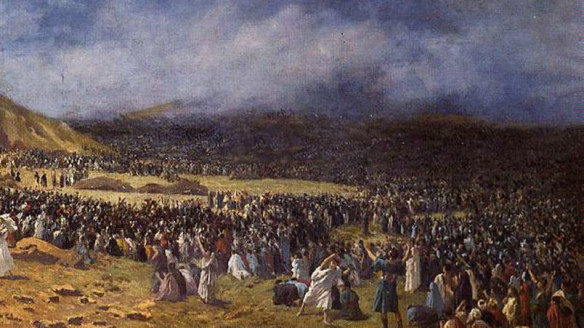
- Today’s passages have some stuff in them that you may find unsettling, and it’s important to acknowledge this right at the start. We’ll think a little bit more about the concerns you may have in the summary comments later.
- If you could make up any rule which could become law, and everyone had to follow it, what would it be? Think about why you think the rule would be a good one. What would the punishment be for not following the rule?
- If you’re anything like me, you might have chosen a rule which benefited you. Did you?
- God gave the people more than just the commandments from yesterday’s passage. We hear God detail quite a bit of extra law in today’s passage from the ongoing Exodus narrative we’re working through. What additional commands did God stipulate in Exodus 21? Name two.
- Are you surprised by any of the commands? If so, why?
- As you consider the idea of slaves, don’t forget that the Israelites were once slaves in Egypt. If they now had slaves too, what differences in the way God said to treat them do you think were better than the way the Israelites might have been treated in Egypt?
- Exodus 21:22-25 is rather complicated to consider. The situation seems to be two men having a fight and accidentally hitting a pregnant woman, causing her to have a miscarriage or an early birth. For now, it’s probably worth just considering that God shows compassion for the unborn baby, and also considers in giving punishment whether something was purposefully done or whether it was accidental.
- Does God believe we can keep every law? So what should our attitude toward these commands be? Use the Galatians passage to help you.
Before we discuss slavery, one other thing. We’re about to skip some chapters. This is the biggest jump so far. We’re skipping several more chapters on the detail of the law, as well as a number of chapters talking about the rules for building the “Tabernacle”, which was a very special portable place which housed the Ark of the Covenant (which had the Ten Commandments in it). We will be thinking more about it later in the reading plan, so don’t worry for the moment. It’s worth considering that these verses we’re skipping are no less important, and by skipping them we’re not ignoring difficult passages in the bible, as you’ll have noticed with today’s choice of reading.
So, Exodus 21 refers to slaves, and it is probably worth while talking about this in a little more depth. Please forgive the length of these comments, but even these notes will only scratch the surface of a complex theme.
The Old Testament seems to condone the use of slaves. God gave rules about the treatment of slaves, but didn’t say that there should be no slaves. God did say, however, that “there should be no poor among you” – sadly, however, the fact of the matter was that through greed or other sinfulness, there were poor people, some who were probably destitute. Slavery therefore wouldn’t have been part of God’s plan but – like Moses allows divorce for a short period of time later – God allows it in specific situations like this.
The next thing to mention is that the slaves that the Israelites had were not ones which had been kidnapped or sold like slaves are nowadays. Kidnapping was a sin, as indicated in Exodus 21:16. These slaves were more likely to be people they had defeated in battle (and they were spared death if they worked) or were voluntarily slaves because they had no means of making their own living and needed to be looked after by their master in “payment” for their work. Taking in someone who had no other way of surviving could have been quite a kind act, even if they had to work hard.
If slaves were therefore allowed, what rules were there about having them? Well, harming them was as bad as harming a free man (see the similarities between verses 18-19 and verses 20-21). If an animal killed a slave, it was treated in the same way as if it killed a free man. Slaves were given rights to celebrate certain days, including the Sabbath (Exodus 20:8-11 is for all people) and Passover. Slaves also had the opportunity for freedom (and this is the biggest difference between slavery now and then). After six years a slave could go free and was entitled to support (Deuteronomy 15:14).
So, does the bible allow slavery now? No, the bible doesn’t condone it now. In the Old Testament it acknowledged slavery and regulated it. In the New Testament, the seeds were planted for the end of slavery.
Nowadays, when we think of slavery, we think mostly of human trafficking, sex slaves, and so forth. Slaves as described in today’s passage had rights and were treated more like servants. Whilst this is a sad situation, it’s hard to compare it with the sort of slavery that happens today where people are bought and sold for financial and sexual gain.
In our modern and “enlightened” times, the bible is criticised and ignored by many for its “outdated and evil” rules on slavery. So surely the problem of slavery is much less than it used to be?
Nope. There are more slaves in the world today than at all other times in history combined. More money is made in slavery than in illegal weapons, and is nearly as profitable as the drugs trade. Approximately 27 million people are victims of human trafficking today (about half the population of England). 50% of these are children. 80% are woman and girls. This abuse is the opposite of the biblical care for the types of slaves in the Old Testament. We only need to turn on our television screens at the moment to see the damage this is doing to society.
Spiritual change slowly eradicated the problem of slavery in the bible. In the New Testament, Philemon refers to slaves as “fellow men and brothers in the Lord”. Jesus came for the Jew and the non-Jew, the slave and the free. All people are equal in the sight of God, through the blood of His Son.
If all people had that view of other people nowadays, the millions of victims of sex-trafficking would be freed and cared for. But in today’s society, we “need” cheap products and cheap sex. The bible prohibits the abuse of anyone, including slaves. It promotes fair working conditions (1 Timothy 5:18). It promotes healthy sexual relationships (1 Corinthians 7:2). God’s laws are for our protection. If we all followed this law and loved one another, modern slavery would be abolished.
What do you think? Please do speak to me privately if you want to discuss this further.
Leave a Reply
You must be logged in to post a comment.