Readings
- Exodus 32
- Psalm 106:19-23
- Acts 7:37-43
Prayer
Pray… that you will spot the idols in your life and put them in their right place, rather than in God’s place!
Day 64 -Moses & the Golden Calf
Moses’ absence for 40 days & Israel’s idolatry
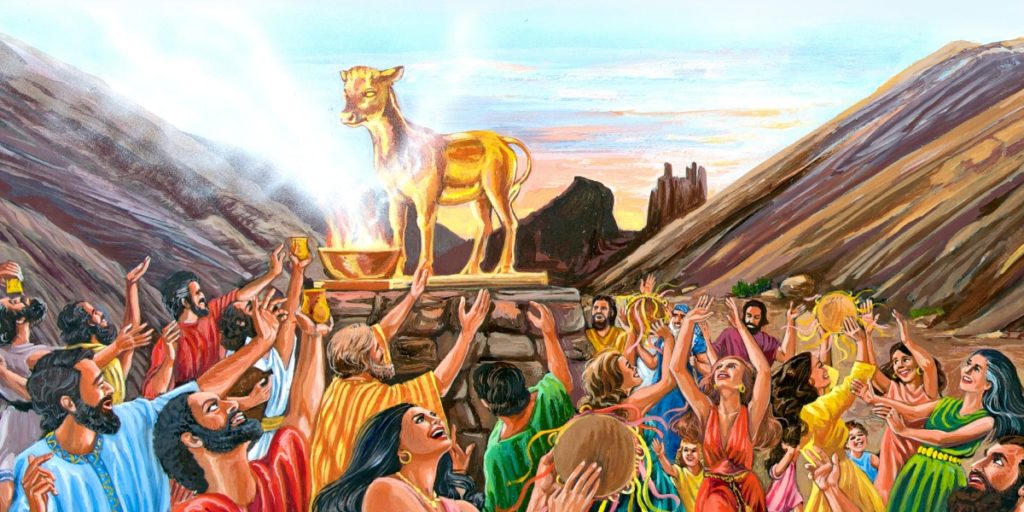
- Today’s astonishing story is a clear indication of the frailty of our hearts when it comes to forgetting God and incubating sinful attitudes. As you read Exodus 32, you should have been shocked at the brazen actions of the ungrateful Israelite people.
- Let’s contextualise the situation. We’ve recently read that Moses left the people to climb Mount Sinai to speak with God and receive the Ten Commandments. The people had been given the law – guidelines on how to live as God’s chosen nation – and had confirmed their love for Him. It seemed, however, that the length of time Moses was away – 40 days – was too long for the people to handle, and they became impatient.
- How had the people forgotten God’s, as well as Moses’, guidance as they came to Aaron in Exodus 32:1? What did the ask for?
- When your parents are away, like Moses was away, do you still follow their training and commandments? Where do you stretch, or break, the limits you know your parents would want you to stick to? What goes through your head at those times?
- What did Aaron agree to do? Are you shocked? Remember, Aaron was with Moses from the beginning. He knew the God that had saved them. Why do you think Aaron gave in to the demands of the people? Was it peer pressure?
- What lame – almost laughable – explanation for his sin did Aaron give to his brother in Exodus 32:21-24?
- Aaron knew it was wrong to create the idol. You know it’s wrong when you give into peer pressure too. Why did he do it, and why do you? Is it because your friends are more important than your relationship with God?
- What consequences were there for the Israelites because of what they did?
- What was Moses’ important role in this story? Consider verses 11-14, 15-19, 20, 25-29 and 30-34. What, for example, was Moses comment to God in Exodus 31:12?
- Idols are not just made out of gold, or carved with wood. You know that, I’m sure. After you do this study, or when you’re next relaxing in front of the TV, watch the adverts and look for all the times when idols in the form of ideas, possessions, achievements or success are sold to us. It’s relentless, isn’t it?
- What idols are in your life? What about in your family life? Can you change any of these?
Can I encourage you to think about these two questions too, as you finish?
- How was Moses like Jesus?
- How was Moses not like Jesus?
They may sound like contradictory questions, but they may have helped you to think about this story from a Christian perspective.
Moses, at the top of the mountain, pleads to God to not destroy the people. His arguments are good and logical – he talks of Gods’ past saving power, he talks of God’s reputation amongst the other nations who were watching Israel, and he talks about God’s covenant with Abraham. In a way, he “intercedes” for the people, just like Jesus intercedes for us now. That means he argues our case for us, like a lawyer on our side in a court.
But at the same time, Moses isn’t like Jesus. In Exodus 32:30, Moses thinks that he can make atonement for the sin of the people. That means to deal with their sin by taking the punishment himself (by dying, which is what is meant in Exodus 32:32). God rejected this suggestion, because the sinners should be the ones to die, not the guiltless.
And of course – Moses wasn’t actually guiltless. He was a sinner too (see Numbers 20:1-13, for example). When an animal sacrifice was made, it had to be a pure, healthy spotless lamb that died. Moses was sinful and therefore unfit to die in the place of the people.
But Jesus was. This is why Jesus’ death is so important and powerful. He came as a human and live a perfect life of obedience. Only then would his blood on the cross be sufficient to make atonement for us and take away our sin.
Leave a Reply
You must be logged in to post a comment.