Readings
- Leviticus 9
- Leviticus 10:1-7
- Revelation 1:5-6
Prayer
Pray… for a clear mind during this period of difficult teaching.
Day 69 – Priests vs. Nadab/Abihu
The true priests in the Old (Levite) & New (Christian) Testaments
- Phew – if the creators of this reading plan are trying to make it difficult, they’re succeeding! Two passages in Leviticus and one from Revelation, and we’re continuing to read about very detailed commands for things we don’t do anymore. It makes for some tricky stuff. That said, if you read carefully you should be able to follow along the story without too much trouble.
- We read yesterday that Aaron was a priest. He was ordained (that means made a priest) in chapter 8 of Leviticus, which we didn’t read in this plan. In today’s passages, we read that the first thing he did was to offer sin offerings for himself (Exodus 9:8). Why do you think Aaron had to first offer a sacrifice for himself before he continued with the other parts of the ceremony, as detailed in chapter 9?
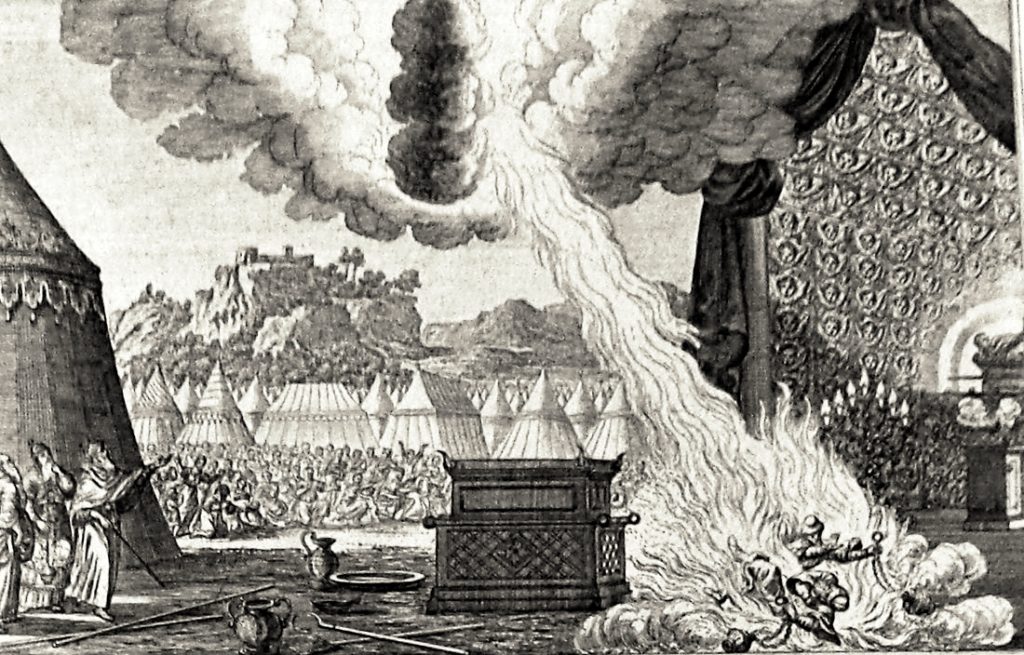
- What was the reason for the ceremony? What happens in Leviticus 9:24? What do you think is going on?
- The Israelites were required to give offerings to “atone” (which means “deal with”) for their sin. Are we? Why, or why not?
- What kind of offerings can we give to God instead?
- In Leviticus 10, we read about Aaron’s sons, Nadab and Abihu, who were also priests. Did they act in a proper way?
- What was God’s immediate response to their sin? What did God then add as a secondary response to their actions? What does this tell us about God’s anger against sin?
- People who have a role such as being a pastor or a priest have extra responsibility to keep to the standards they are sharing with others. God dealt quickly with these disobedient priests. Do you think this still applies to leaders and teachers in the church now? The book of James has something to say about this if you can find it.
- The passage in Revelations says that we, as Christians, are like priests. What does this mean and how can we take this responsibility seriously (and not make the mistakes that Nadab and Abihu made)?
When we think of priests, continue to remember that they only had a role that could help bring temporary salvation to someone. We should always be looking further than that. They point us to Christ.
You can see cracks in the sinful actions of Aaron as he allowed the people to build the golden calf, and his sons in their behaviour today. Priests in the Old Testament could be far from perfect. In a way, we shouldn’t be surprised, for “all have sinned and fallen short of the glory of God”, as Paul would later write in one of his epistles. The priests that made sacrifices for the people had deal with their own inadequacies before God too. That’s why Aaron had to make his own offering to God before he could offer animals for someone else.
Hebrews 4:15-16 gives us amazing truth about Jesus, as our Great High Priest. He knew temptation, struggle and weakness, but in every way was without sin. Jesus knows what you struggle with, and he knows what I fight against in my life too. He lived a life with all the highs and lows of ours – and more – and died a sinless man. Not only that, but he was fully God too. He, then, could do what no ordinary priest could ever do, and act as our mediator with the Father, interceding for us powerfully and, crucially, eternally.
Thank you Jesus – our Great High Priest!
Leave a Reply
You must be logged in to post a comment.